
The World's Attention Is Moving Toward Smaller Strategic Economies
- Alice Santos
- Jun 27
- 1 min read

The next decade will not be defined only by mega economies.
It will be defined by countries that act as strategic gateways.
Cape Verde is one of them.
Not because of its domestic market.
Because of its position.
Situated between Europe, West Africa and the Americas, politically stable, Portuguese-speaking and increasingly connected internationally, Cape Verde occupies a unique geopolitical position that is still underestimated by international investors.
But Cape Verde is only one chapter.
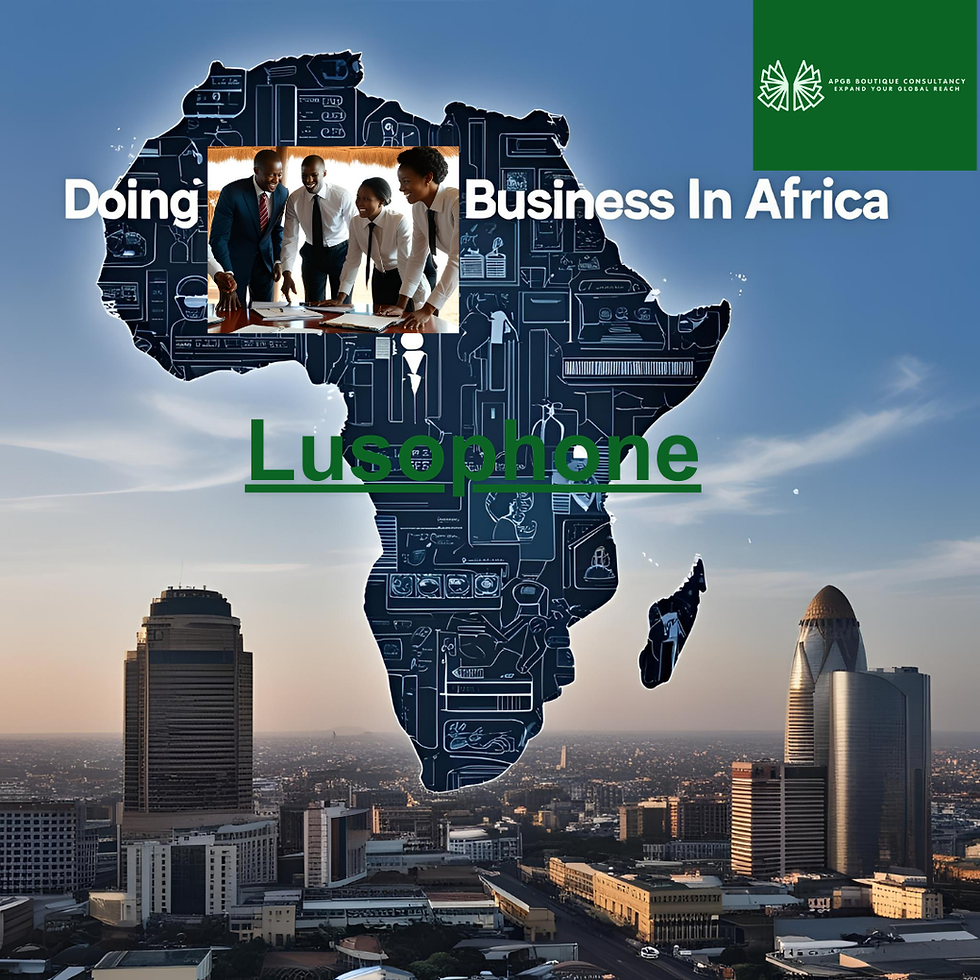
The bigger story is Lusophone Africa.
The UK Has a Blind Spot
British investors understand:
United States.
India.
Middle East.
Singapore.
Eastern Europe.
Increasingly, they understand Francophone Africa.
Yet one of the fastest-developing investment ecosystems remains significantly under-analysed:
The Portuguese-speaking world.
This includes:
Angola
Mozambique
Cape Verde
Guinea-Bissau
São Tomé and Príncipe
Combined with Portugal and Brazil, these markets create a Portuguese-speaking economic ecosystem spanning four continents.
Most advisory firms analyse these markets individually.
Few understand how they interact.
Even fewer help international investors navigate them strategically.
The Cost of Being Late
Capital rarely rewards consensus.
By the time a destination appears on every investment conference agenda, most first-mover advantages have already disappeared.
Institutional investors understand this.
Family offices understand this.
Private equity firms understand this.
The question is no longer:
"Is Africa investable?"
The better question is:
"Which ecosystems remain structurally undervalued?"
That is a fundamentally different conversation.

Comments