
Why Cultural Intelligence and On-the-Ground Insight Are Essential for Successful Market Entry in Africa
- Alice Santos
- Nov 20, 2025
- 3 min read

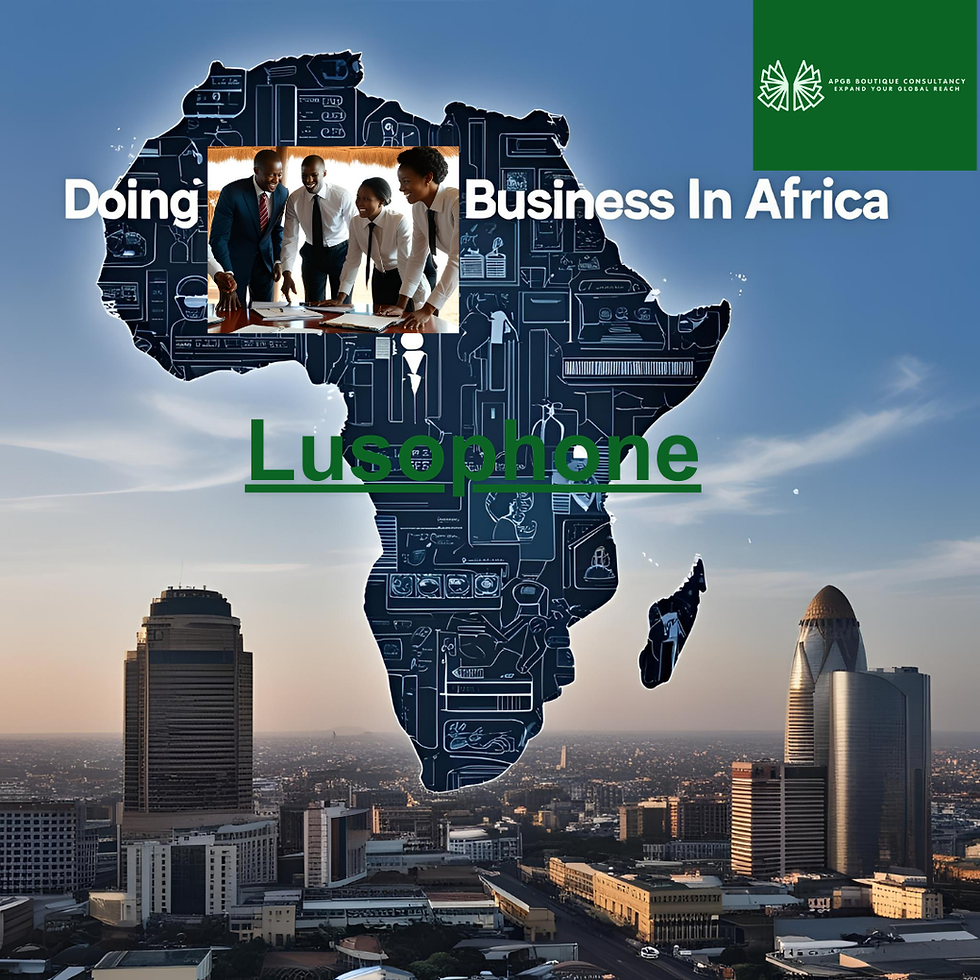
For international companies exploring opportunities in Africa, selecting the right boutique consultancy firm is a critical step. Many organisations begin with desk research, reviewing reports, analysing datasets, and studying regulatory frameworks. While this information provides a helpful foundation, it cannot replace the value of local knowledge, cultural intelligence, and direct engagement with real stakeholders.
APGB Boutique Consultancy helps companies enter African markets with confidence by bridging the gap between what is written and what actually happens on the ground.
Cultural Nuance: The Hidden Driver of Business Success in Africa
Entering African markets requires more than understanding regulations or macroeconomic trends. It requires a deep level of cultural intelligence, the ability to navigate how people communicate, negotiate, make decisions, and build trust.
Unlike many European or Asian environments, African business cultures often prioritise:
Strong personal relationships
Respect for hierarchy
Patience and long negotiation cycles
Face-to-face engagement
Community approval and informal influencers
These cultural dynamics frequently determine whether a partnership moves forward or stalls. For companies new to the continent, recognising and adapting to these nuances is essential.
Lusophone Africa: Where Language and Culture Shape Opportunity
Portuguese-speaking African markets—Mozambique, Angola, Cape Verde, Guinea-Bissau, and São Tomé e Príncipe—share a common language but are culturally, politically, and administratively distinct.
Misunderstanding these differences can lead to:
Miscommunication with local partners
Incorrect expectations around timelines
Selecting ineffective or misaligned collaborators
Misreading informal decision-making structures
With APGB’s specialised expertise in Lusophone Africa, companies gain a clear cultural compass and tailored market-entry guidance that goes far beyond desk research.
From Reports to Reality: What Businesses Discover Only on the Ground
Many organisations arrive in Africa with detailed reports, yet within days, they realise the reality is more complex.
Executives often encounter:
Regulatory processes that take longer than suggested
The importance of community acceptance, even for private projects
Meetings that begin and end with relationship-building conversations
“Yes” responses meaning “not yet,” “maybe,” or “let’s continue talking”
Informal networks that can unlock or block access
These elements simply cannot be captured in a PDF or online report.
Why Presence Matters
On-the-ground engagement enables companies to:
Validate assumptions from desk research
Identify the true decision-makers
Assess market appetite for their products or services
Understand local risk perceptions
Tailor pricing, messaging, and timelines based on reality
APGB provides this crucial, reality-tested intelligence through local networks and direct field experience.
The Hidden Variables Desk Research Can’t See
African markets are shaped by informal economies, social norms, and community power structures. These systems represent a major portion of economic activity but rarely appear in formal documentation.
Desk research often overlooks:
Informal trade and distribution networks
The influence of traditional authorities
Unwritten rules around approvals and permits
Cultural negotiation norms
The role of local influencers in decision-making
Ignoring these informal systems can lead to costly errors and missed opportunities.
APGB’s network of trusted partners ensures companies understand both the official and unofficial landscapes, enabling stronger, faster, and safer market entry.
Desk Research Opens the Door, Local Partnerships Unlock It
Consider two companies preparing to enter an African market:
Company A (Desk Research Only)
Relies heavily on online data
Assumes regulatory processes are linear
Chooses partners based solely on digital profiles
Underestimates the importance of community relations
Builds unrealistic timelines
Their market entry falters due to unseen gatekeepers, cultural misalignment, and unclear expectations.
Company B (Desk + Local Insight)
Validates research with field intelligence
Meets stakeholders face to face
Invests in cultural understanding
Builds relationships with key influencers
Tailors strategy to local norms
Their entry is smoother, faster, and built on trust, not assumptions.
APGB’s Advantage: Insight + Presence + Cultural Fluency
APGB delivers an Africa market-entry approach grounded in:
✔ Accurate, verified local intelligence✔ Deep cultural understanding across Lusophone Africa ✔ Long-standing networks and trusted partnerships✔ Hands-on experience in complex environments✔ Tailored strategies for companies seeking long-term success
This combination ensures clients navigate African markets with clarity, confidence, and the right local partners.
Final Thought
In Africa, success is not driven by data alone.It is driven by cultural intelligence, trusted relationships, and real on-the-ground insight.
APGB helps companies turn market-entry strategies into sustainable, confident operations across the continent.

Comments